When an international academic journal called Science of the Total Environment (Stoten) retracted 161 peer-reviewed articles over a frenetic four-week stretch in August and September, one-quarter of the axed papers involved a little-known research centre at a university in Sydney.
The excisions from Stoten, once a go-to journal for environmental researchers, highlight alleged loopholes in the quality assurance mechanisms of one of the world’s biggest and richest academic publishers, and underline concerns that academics can exploit loopholes to build their careers around a scarcely believable publication output.
Stoten’s publication output increased tenfold over the decade from 2012, according to the Spanish newspaper El País, to rank among the top 15 journals in the world on some hybrid measures of volume and quality. But cracks in the journal’s reputation appeared following the 2020 publication of a widely derided paper suggesting that Covid-19 could be prevented by the magnetic fields from jade amulets in traditional Chinese medicine.
In an article published in November 2025, El País attributed the journal’s troubles to the 2012 appointment of Spanish chemist Damià Barceló as an editor-in-chief. Barceló told Times Higher Education that he was one of five people who held the position over the decade, and one of almost 50 people who make editorial decisions about articles.
As questions swirled about the reliability of Stoten papers, its owner – Dutch publishing giant Elsevier – began to take a closer look at its contents. It retracted no fewer than 38 Stoten articles on a single day in December 2024, saying their corresponding author – a Brazilian environmental scientist named Guilherme Malafaia – had submitted 75 “fictitious” reviews of the papers, attributed to other people.
“The editors-in-chief have lost confidence in the validity/integrity of the article and its findings,” each retraction notice says. Swedish ecotoxicologist Michael Bertram was one of about half a dozen researchers whose names were used in the “fake peer reviews”, according to Science magazine. “I was more disappointed than shocked,” Bertram told the magazine.
In a 28-page open letter, Malafaia denied any wrongdoing and suggested that his institutional email account had been hacked. “If the editorial system fails to verify reviewers, why should authors be punished for a deficiency that is beyond their control?” he asked. “Could these individual retractions reflect a broader failure in editorial management?”
In mid-November last year, analytics company Clarivate delisted Stoten from the Web of Science databases, depriving the journal of its impact factor – a marker of prestige and a primary motivation for academics to seek publication in the journal. Elsevier responded by announcing “in-depth investigations” of “potential breaches” of the journal’s publishing policies. “We…are committed to correcting the scientific record in a responsible and transparent manner,” it said.
Many of the 161 Stoten papers retracted between early August and early September were spiked over “suspicious” changes in authorship between the original submissions and the revised versions following feedback from reviewers. In one example, 22 of the 26 listed authors’ names had been added at revision stage.
“The authorship of a paper records who is responsible for the work,” an Elsevier spokeswoman told Times Higher Education. “When substantial changes cannot be explained, it becomes difficult to verify who contributed to and stands behind the published article. That raises concerns about the reliability of the findings and conclusions of the article and, therefore, the integrity of the scholarly record.”
Scores more papers were retracted because the handling editors had “extensive” or “ongoing” collaborations, including co-publication, with some of the authors. Other articles were expunged over findings that authors had added dozens of new citations to papers at proof stage, “plagiarised” parts of their previous work in what was supposed to be fresh research, or included passages that “deviate from standard technical terms” – a sign that artificial intelligence had been used to disguise borrowed phrases.
These are all variations on what critics broadly decry as “edit-for-pal” practices, where research collaborators edit, review and recycle each other’s work and give each other unearned authorship credits, boosting the publication and citation metrics on which career advancement so often hinges. Critics say such practices have helped drive a sharp increase in low-quality research papers.
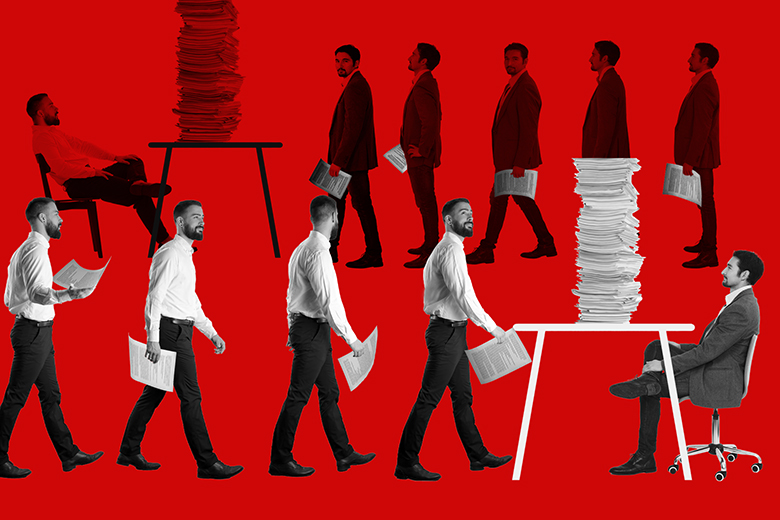
“Smut Clyde”, a blogger on the For Better Science website, calls it “parody science” or “parascholarship”, where “forged papers” cite “other forged papers” in a “cargo-cult travesty” of academic practice. “The temptations of parascholarship are obvious. You are more productive and higher-ranked than genuine researchers, hence better-rewarded, because you don’t waste time or any of your funding on conducting genuine research.”
Targets of such commentary say they are the victims of smear campaigns conducted online under a cloak of anonymity. “Scientific misconduct, research fraud and paper mills represent significant threats to research integrity and…publishers have an important responsibility to investigate credible concerns, [but] these issues should be clearly distinguished from situations in which researchers experience repeated…unsubstantiated [and] duplicative allegations,” Barceló said.
“Does Elsevier acknowledge that the same small group of individuals repeatedly raises concerns about the same authors and research groups across multiple channels, including PubPeer, direct emails, social media platforms and communications with publishers? Does Elsevier Ethics independently verify allegations?”
The publisher insists that its probes are thorough. “Investigations are completed in partnership with journal editors and independent subject-matter experts acting on the editors’ behalf,” its spokeswoman said. “The parties involved are invited to provide explanations, additional data and any other information they consider relevant. Decisions on any action that follows are made independently by the journal editors or the subject-matter experts, never by the Research Integrity team.”
Huu Hao Ngo, a distinguished professor of environmental engineering at the University of Technology Sydney (UTS), edited 30 of the retracted Stoten papers and co-authored another two. Many of the papers he had edited were withdrawn because of his frequent collaborations with almost 20 co-authors from universities in China, India, Vietnam and Australia, including UTS and UNSW Sydney.
Some of the papers were spiked over unexplained authorship changes, including one in which 10 of 16 listed authors had been added at revision stage. The articles Ngo had co-authored were removed because of his “ongoing collaboration” with Barceló, who had edited both papers.
Barceló is also an executive advisory board member of the Australasian Practical Zero Emissions Society (Apzes), a non-profit organisation that Ngo founded in 2022, while two of the papers’ other co-authors hold positions within the organisation. Apzes charges corporate membership fees of A$48 (£25) per employee. Ngo, as corresponding co-author, failed to mention this in declarations of competing interest which acknowledged “no known competing financial interests or personal relationships”.
Ngo told THE that Apzes had not been created “to make a profit for its members” but conceded that the relationships should have been revealed. “I apologise for this omission and would like to ask the journal for advice on the most appropriate way to formally disclose this.” But he disputed whether retraction was the appropriate response “since it would mean losing valuable scientific findings”.
As for the authorship changes, Ngo conceded that these should not have occurred either and offered several possible explanations for them: he had relied on the corresponding authors to follow journal policy; he had focused on technical, methodological and scientific revisions rather than checking the “metadata”; the system had “failed to highlight” additions and deletions of authors; or the change had gone unnoticed because “there is no standardised checklist”.
“This is not an excuse,” he said. “Rather, it acknowledges an obvious weakness in our editorial oversight procedure. I strongly recommend that the publisher provide automated system warnings whenever the author list changes between submission rounds.”
In yet another Stoten paper, as yet unretracted, Ngo is listed as both editor and author. “I’m struggling to see how I missed this during the editorial process, and I am genuinely sorry for my mistake,” he said.
“The journal’s editorial office or the editor-in-chief should have noticed this and assigned the manuscript to a different editor. I also admit that I have a responsibility to recognise and to disclose such conflicts. It is possible that the corresponding author(s) added my name as a co-author while revising the manuscript without notifying me, and I did not notice the change. However, this remains to be verified.”
Sources say it is not uncommon for authors’ names to be added to papers without their knowledge. “It tends to be…people who are quite prestigious,” said Adrian Barnett, a Queensland University of Technology mathematics professor and research integrity advocate. “Having them on the paper will help you get through peer review.”
Barnett said authorship irregularities were the most commonly reported research integrity issues in Australian universities, usually because junior researchers had been denied credit after doing most of the work. But the converse also applied, with junior researchers “forced” to claim credit when they had made no contribution.
In one “fairly big” group, which had “attracted a lot of funding”, PhD students were routinely listed as authors on each other’s papers, he said. Internal complaints about the practice had gone disregarded, with the university unwilling to undermine the group’s success.
“It’s a way of boosting the centre,” Barnett said. “[PhD students] in that centre will have more papers on their CVs. It makes them more competitive, and then they get funding, which makes that centre look better. It stinks [but] they’re probably not the only group doing it.”
Barnett worries that such practices are becoming so normalised that people feel their careers will go nowhere unless they follow suit. “There are a whole load of freeloaders in academia,” he said.
THE sought comment from more than 10 editors and co-authors of retracted Stoten papers, from three Australian universities and institutions in China, India and Spain. Most asked not to be named and denied any wrongdoing, saying they had followed the journal policies at the time and had not sought to artificially increase publication or citation metrics.
“I was a co-author of the paper – not the submitting, first or corresponding author – and had no role in selecting the journal or the handling editor; nor did I have prior knowledge which editor would be handling this manuscript,” one said. “The editor in question was appointed and assigned solely by the journal editorial office,” said another. “I was only a co-author on these manuscripts, and was not directly involved in the submission process, conflict-of-interest declarations or editorial communications,” said a third. “All matters regarding author list adjustments, submission updates and editorial communications fall under the direct responsibility of the corresponding author.”
In practice, authors have considerable influence over who reviews and edits their work. A video explaining Elsevier’s author submission process says researchers “may have the option to request an editor” to handle their papers. Some journals also require authors to suggest potential reviewers, complete with first name, last name, institution and email address. Stoten is one of those journals, according to a University of Vermont guide.
Additionally, authors may have the option to oppose reviewers they would prefer not to review their work. Journals and their editors are not required to comply with authors’ requests, but sources say they usually do, because finding reviewers and editors is the hardest part of the job and any suggestion is welcome. With around 200 editors on Stoten’s books, combing through the list is time-consuming.
Elsevier says that “while authors can share information which may assist our editorial teams in identifying subject matter experts, they cannot select editors or reviewers. Editors…must adhere to our policy, notably around conflicts of interest and independence, and make this clear on the published research.”
A whistleblower, who asked not to be named, was scathing of the process. “When researchers who co-author dozens of papers a year also sit in judgement of each other’s manuscripts, the independent scrutiny that peer review is supposed to guarantee isn’t happening.”
Moreover, since “citation counts and h-index are the basis for hiring, promotion, grants and awards, the damage isn’t confined to the journal record. It follows the money and the careers built on it”.
He also suggested that universities have a structural conflict of interest when the individual beneficiaries of shady practice in high-volume publication are “also their highest cited [researchers] and grant-income drivers”.
The US News and World Report ranks UTS as the 11th best university in the world for research and teaching on water resources. “[That] ranking…rests on the same publication metrics now in question,” the whistleblower said. “[It is] a real incentive to look away.”
UTS rejected the claim. “The university works hard to support responsible research practice, addresses concerns when they arise, and acts to improve systems and resources that enable researchers to conduct their work with integrity. UTS never ignores or takes lightly any allegations…regarding research integrity.”
The university’s reputation in water resources “is based on the breadth and depth of our expertise, which is multidisciplinary and cross institutional rather than relying on the work of a single area”, she added.
An editor of multiple retracted papers said that when he had become an associate editor of Stoten, the minimal advice he had received consisted of a sheet of “tips” on how to proceed – and survive. “Our average rate of acceptance is slightly below 30 per cent, which would be a good number to shoot for,” it says.
The editor said “potential conflicts” arising from collaboration had not emerged as an issue until February 2024, when an email from the journal advised editors to be mindful of them. Prior to that email, he had rejected more than 10 manuscripts from the authors with whom his “perceived collaborations” eventually led to retractions. After the email, he had not handled any manuscripts involving collaborators.
He said that during his tenure with Stoten he had handled hundreds of manuscripts a year. They had been assigned by the journal based on editors’ area of expertise. Editors had no role in selecting the manuscripts or authors assigned to them, or in authorship changes.
Another researcher said she had handled more than 3,000 manuscripts as an editor for multiple Elsevier journals and had “strictly” followed peer review protocols and conflict-of-interest rules. She said Stoten had attracted scrutiny largely because of its unusual practice of listing the handling editor’s name on each paper, which made potential conflicts more visible. “If comprehensive audits were carried out across the field, I believe that comparable procedural oversights would be found in many other journals,” she said.
They already have, as journal article retractions – once something publishers pursued with extreme reluctance – increasingly become mass events. In 2024, Wiley closed about 20 of a subsidiary publisher’s journals after retracting more than 11,000 of their papers over the previous two years. And in August Retraction Watch reported that Elsevier had pulled over 650 papers from its open-access “mega-journal” Heliyon, and vastly reduced its output, after Clarivate temporarily stopped indexing its contents in 2024 over quality concerns.
At the same time, Clarivate also put Springer Nature journal Cureus on hold, even though the publisher had already retracted 56 papers suspected of having been produced by a writing ring. Likewise, the retraction of 86 papers from Taylor & Francis journal Bioengineered failed to save it from being delisted last year. More recently, Elsevier’s International Journal of Biological Macromolecules retracted more than 100 articles because of manipulated peer review in guest-edited special issues.
The researcher who edited for Elsevier said it was unfair to blame academics for publishers’ systemic failures. “Formal policies were not clearly established. Required procedures were never communicated to authors. Journals themselves approved these manuscripts through their official review processes.
“Who bears ultimate responsibility for these errors? Who should truly be held accountable? Publishers and editorial teams also carry a core duty to set unambiguous rules, provide clear guidance and flag exactly what approvals or disclosures are needed before work is submitted.”
A Chinese academic said Elsevier gave little guidance and training to its editors while saddling them with enormous workloads, of between 300 and 900 manuscripts a year in many cases. He contrasted Elsevier’s conflict of interest policy with the more granular directions from the journal PNAS, which specifies that collaboration within the past two years constitutes a competing interest.
“Elsevier should empower their system to automatically detect such conflicts, rather than leaving it to every editor’s caution,” the academic added. “I had never been told by the publisher or the editor-in-chief that I cannot handle a manuscript from a previous co-author.
“[On] multiple occasions, the editor-in-chief assigned me papers which should not [have come] to me…even papers [of which] I was a co-author. Elsevier should not have given the editors so much work, which was a root cause of many problems.”
Elsevier’s spokeswoman said the publisher provided “extensive” guidance and training for everyone involved in the publishing process – especially editors – including bespoke workshops. “We also offer resources, such as the Researcher Academy, for authors and researchers more broadly,” she added. “Our policies on conflicts of interest in the editorial process…are longstanding – at least 20 years old at this point – and consistent with those of other publishers. [They] are visible to editors, reviewers and authors. Our editors [also] have access to clear online guidelines.”
Four of the retracted Stoten papers involved a trio of University of Western Australia (UWA) researchers. Two of these articles were withdrawn over ongoing collaborations between a UWA author and the papers’ editors. UWA said it maintained “the highest standards of research integrity” and stressed that “the existence of a retraction does not, in itself, establish that research misconduct has occurred”.
Two of the UWA researchers, environmental chemist Nanthi Bolan and agricultural scientist Kadambot Siddique, are extraordinarily productive authors, whose Google Scholar profiles list well over 1,000 papers each. Bolan has averaged at least one article a week, and Siddique at least two a week, for much of the past decade.
The pair, along with Ngo and Barceló – also hyper-prolific authors – are among 11 retracted Stoten authors and editors who have disappeared from Clarivate’s Highly Cited Researchers list in recent years, even though the four researchers’ annual citation counts have continued to increase in the years since.
Clarivate said it did not comment on individual listings. It said the list was based on a “rolling eleven-year citation analysis window”, and evolving selection policies. “Inclusion in consecutive years is in no way guaranteed,” said Ryan Fry, Clarivate’s lead data scientist. “A researcher who does not meet the criteria in any given year is not considered to be ‘removed’.”
But he said the tally of “exclusions” due to “anomalous publication and citation patterns” had been mounting in recent years, from 500 in 2022 to 1,000-plus in 2023, 2,000-plus in 2024 and about 2,400 in 2025. For context, last year’s list contained around 7,000 researchers in total. “These figures are sobering,” Fry said. “They highlight the need for deep qualitative review alongside any quantitative assessments in analysing the research literature.”
While Bolan and Siddique did not directly respond to requests for comment, two other prolific authors involved in Stoten retractions shrugged off their high publication counts. “My output is consistent with the research work and projects I lead or contribute to, and with accepted norms in our field,” one said. “Many internationally recognised researchers publish at even higher rates,” said another. “In my view, research productivity reflects a combination of individual expertise, sustained effort, collaboration and available resources.”
Sources say extraordinarily high publication rates are understandable in some cases. One example is when somebody produces a very useful dataset, or an algorithm for analysing findings. If these are not made open source, researchers who want to use them have to liaise with their creators, which often ends up in an authorship credit for the latter, especially if they adapt the algorithm to fit the needs of the researchers. But for most researchers, QUT’s Barnett said, making anything more than “fleeting” contributions to 100 papers a year is “surely impossible”.
He said people who had been “getting away with” improbably fruitful research profiles tended to drop their guard after a few years. “Then…somebody starts to look a bit more deeply at their work and that’s when the whole thing unravels.
“Getting hacked once – that can happen. But when you’ve got repeated clangers in your publication history…you paint yourself into a corner. There aren’t so many excuses you can reuse.”
Barnett has concise advice for researchers keen to avoid being fingered as members of writing rings: “Be careful. Do science slowly. You just don’t want anything that’s going to look embarrassing.
“If you’re going to put your name to something, you really should do your due diligence, especially these days where people can use…AI tools to generate papers very quickly. Are you certain you can trust these authors? Be involved in every paper you’re in. Read it. Ask questions about it. If you’re a peripheral player and you start asking awkward questions and the corresponding author can’t answer them – run away.”
Register to continue
Why register?
- Registration is free and only takes a moment
- Once registered, you can read 3 articles a month
- Sign up for our newsletter
Subscribe
Or subscribe for unlimited access to:
- Unlimited access to news, views, insights & reviews
- Digital editions
- Digital access to THE’s university and college rankings analysis
Already registered or a current subscriber?