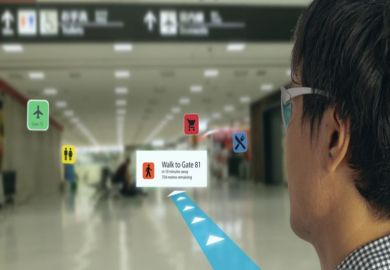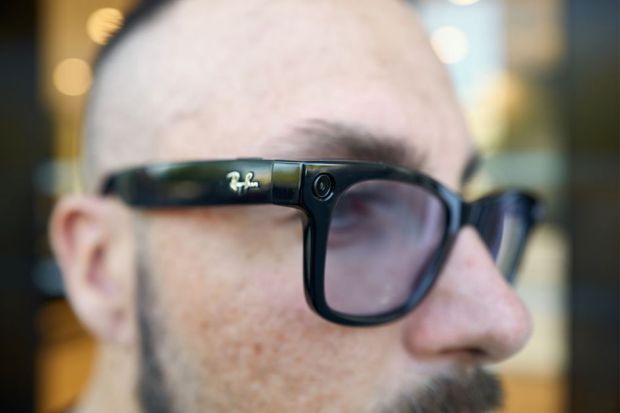
Wearable artificial intelligence (AI) has delivered a death blow to exams as we know them, an assessment expert has warned, amid mounting reports of students using smart glasses to cheat.
The University of Auckland has become the latest institution to discipline a student for taking AI glasses into a test after organisers had “explicitly” warned that smart devices were prohibited.
The phenomenon has moved beyond East Asia, described by CNN as “ground zero” for AI-facilitated cheating. The broadcaster reported that a Taiwanese applicant to a top medical school had been discovered wearing smart glasses in the entrance exam, after an inspection revealed that the glasses’ frame was emitting heat.
In South Korea, people being tested on their English language skills were caught using smart glasses on separate occasions in May. Two years earlier, a Japanese teenager was referred to prosecutors for allegedly using camera-equipped glasses to photograph university entrance exam questions and share them with outsiders, according to Kyodo News.
Thomas Corbin, a research fellow at Deakin University’s Centre for Research in Assessment and Digital Learning, said such reports were the tip of the iceberg. “Most of the cases that we are seeing are just happenstance,” Corbin told Times Higher Education.
“Someone happened to see someone do something, or they were just suspicious, or someone dobbed them in. There’s no real way that people are reliably detecting these things. There’s a lot going under the radar.”
In Australia, apprehension about wearable technology has primarily focused on men using “creep glasses” to film women covertly – a concern that escalated in August, after smart glasses retailing for A$89 (£47) sold out from a national network of department stores. Attorney-general Michelle Rowland has asked Australia’s privacy commissioner to give the issue “priority consideration” but is reportedly not currently considering an import ban.
Observers are also worried about the threat the technology poses to academic integrity, among other issues. Last year, in a “controlled test” by computer engineers at Hong Kong University of Science and Technology, answers generated using a pair of AI glasses earned 92.5 per cent in an undergraduate exam – putting the technology in the top five of 100-plus students.
Auckland said its invigilators were attuned to the problem. “To protect the integrity of assessments, we ensure our examination staff are aware of this technology and what to look for, and can identify and respond appropriately,” a spokeswoman said.
Ulrich Speidel, senior lecturer in computer science, said the university was on top of cheating in exams – for now. “Once smart glasses would be available as contact lenses – at that point I think it’s checkmate for us,” he told Radio New Zealand.
Corbin said that point had already passed. “These things aren’t just glasses,” he said. “There’s also earbuds, and there’s different ways of connecting this technology. Just thinking that you can tell is not going to be enough.
“The cost-benefit ratio for dealing with this – both financially for dealing with exam room security, and socially for dealing with the way we’re going to adjudicate human bodies – is just not going to be worth it.”
Corbin said the solution lay in fundamental assessment principles. “What are we trying to say about a student’s capability…when they leave the university, and are exams the best way to do that? For a long time, there’s been better assessments out there.”
He said banning AI glasses over privacy concerns would not resolve the assessment problems they posed. “It’s very cheap, very easy technology to produce. The barrier to entry, and the barriers for workarounds, are so low. These…things are just in our ecosystem.
“A ban is not…going to be enough for us to put this conversation to the side, and just hope that it solves itself. This is something that we’re going to have to deal with, no matter how the privacy and legal debates pan out.”
Register to continue
Why register?
- Registration is free and only takes a moment
- Once registered, you can read 3 articles a month
- Sign up for our newsletter
Subscribe
Or subscribe for unlimited access to:
- Unlimited access to news, views, insights & reviews
- Digital editions
- Digital access to THE’s university and college rankings analysis
Already registered or a current subscriber?