
Storytelling and theatre techniques to take research to general audiences


Created in partnership with

Created in partnership with
You may also like
Popular resources
One area consistently emerges when I bring theatre-based communication techniques into research environments: evidence provides understanding but stories help people connect. A storytelling approach gives audiences beyond academia a reason to care about research. It provides a human perspective grounded in reality and empathy, helping audiences see how scientific issues affect individuals, families and communities.
Rather than presenting facts in isolation, storytelling provides context, stakes and a logical progression that helps audiences – whether the general public or fellow scholars – connect research findings to real-world experiences. This can improve engagement while preserving scientific accuracy.
A key part of the workshops I lead at the University of Southampton is encouraging academics to reflect on why their work matters. That might mean thinking about who is affected by the research, what problem it is trying to solve or why the researcher became interested in the topic in the first place. A lot of academics are trained to focus on methods, data and findings; the workshops help researchers keep this rigour, while identifying how their research affects the communities connected to it and offering ways to communicate that narrative alongside the evidence. When researchers can clearly articulate this purpose, they often become more effective communicators and advocates for their field.
- Storytelling in STEM: connecting concepts, confidence and identity
- In a world of short attention spans, the best story wins
- How storytelling boosts environmental impact and engagement
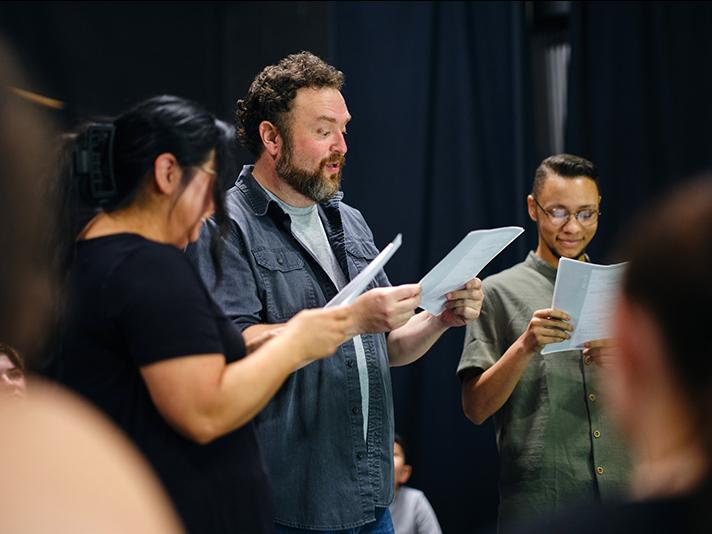
We use techniques borrowed from applied theatre and performance, not to make research dramatic but to help researchers communicate with more clarity, confidence and impact. The workshops draw on performance exercises (such as role-play), narrative construction (for example, visualisation) and participatory storytelling. These methods help researchers develop presentation skills, audience awareness and confidence in public engagement. Participants leave with practical techniques they can apply in conferences, stakeholder meetings, media interviews and community engagement activities.
One technique we explore is story arc; audiences often engage more readily when information is framed as a journey. This narrative structure guides audiences through complexity while maintaining the integrity of the research. For example, one professor was researching how our phones shape attention, intimacy and everyday connection. Rather than opening with definitions, theories and survey data, we explored how they might introduce their work through a familiar observation: sitting in a café and noticing a couple intermittently checking their phones throughout a conversation or watching a group of friends repeatedly interrupted by notifications. From there, the professor could invite audiences into the broader research questions driving their work. The evidence remained central but the story provided a relatable way into the research and helped audiences understand why the topic matters.
These approaches are particularly valuable when communicating research focused on inequality, culture and systemic challenges. Storytelling helps bring forward perspectives that might not always be visible in dominant public narratives and creates opportunities for broader understanding and discussion.
One exercise that often resonates with researchers is seeing their work through the experiences of the people affected by the issues they study. Using visualisation, role-play and a forum theatre approach developed by the Brazilian theatre practitioner Augusto Boal, participants explore how social, political and institutional structures shape people's lives. This encourages participants not only to observe a situation but to actively engage with it and consider alternative outcomes.
The participatory nature of theatre practice also encourages dialogue rather than one-way communication. Researchers are invited to listen as well as present, and consider how their work may be understood by different audiences. This strengthens their understanding of the wider significance of their work.
One of the most rewarding outcomes has been seeing academics gain confidence in communicating beyond their disciplinary communities. Many discover that they already possess compelling stories about their research; they simply need frameworks and techniques to share them effectively. The workshops provide a supportive environment in which researchers can experiment, develop their communication style and strengthen their role as thought leaders.
For participants, the workshops offer an opportunity to develop practical communication skills that can be applied across teaching, public engagement, funding applications and media interviews. Researchers often leave with greater confidence in explaining their work to people outside their discipline. Many discover new ways to make research more accessible, engaging and memorable for different audiences. As a result, participants are often better equipped to advocate for their research, build connections with wider communities and articulate the value of their work beyond academia.
For colleagues interested in adopting similar approaches, the takeaways are:
- Start with why the research matters.
- Consider the experiences of the people connected to the issue.
- Use narrative structures to guide audiences through complexity.
- Create opportunities for participation and reflection.
- Encourage researchers to communicate in ways that feel authentic to them.
Ultimately, it’s about helping researchers answer a simple question: why should someone outside my field care about this? When they can answer that clearly, they are often better able to engage public audiences, policymakers, funders and community partners, while maintaining the rigour and complexity of their work.
Michelle Smith is artistic director of Theatre for Life.
If you would like advice and insight from academics and university staff delivered direct to your inbox each week, sign up for the Campus newsletter.
