
What virtual reality and AI can do for language learners


You may also like
Popular resources
UK language learning faces longstanding structural challenges, marked by weak policy direction, limited progression between educational stages and inconsistent language exposure, especially as study of foreign languages is not compulsory beyond age 14. These gaps reduce learners’ opportunities to build sustained proficiency.
As a result, students often arrive to study languages at university with fragile linguistic foundations and low confidence in their speaking ability. Many learners who have navigated the UK’s patchwork system report feeling anxious, self‑conscious and under pressure in traditional classroom settings, where speaking a foreign language is frequently tied to high‑stakes assessment and performance.
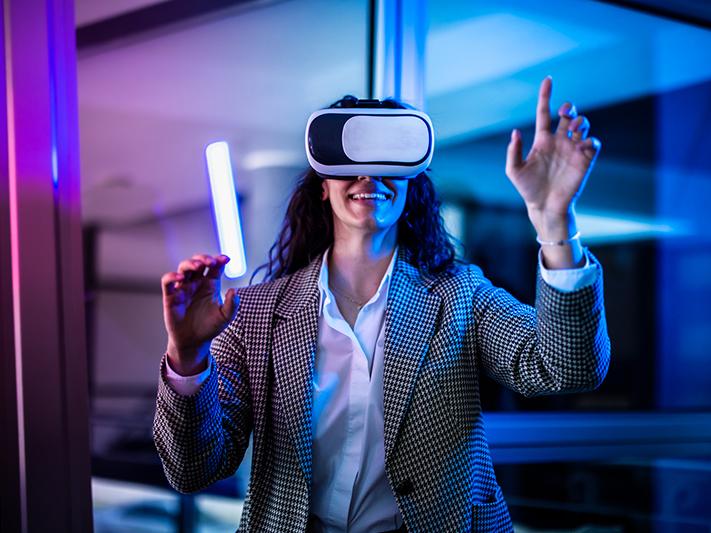
Immersive technologies, when used with clear pedagogical intent, can provide emotionally safe rehearsal spaces. The combination of virtual reality with AI (VR‑AI), for instance, can help to develop that missing confidence. Imagine a 3D restaurant scenario in which a student speaks with an AI waiter in Spanish without worrying about making mistakes in front of peers and teachers.
VR offers a 3D multimodal environment that combines visual, auditory and kinaesthetic input, supporting different learning styles and increasing engagement and motivation through experiential practice. AI, for its part, can help to create an environment that is adaptive and personalised. Students can choose the language and proficiency level, interact verbally with avatars in realistic scenarios, access scripts to support comprehension, and receive feedback and progress reports that track improvement over time – allowing them to work either through headsets or web‑based scenarios on any device at any time. The learner’s ability to control the pace, level and direction of their interaction strengthens their agency, making them more willing to take risks.
When used ethically and with clear pedagogical intent, the integration of VR-AI in flipped, collaborative teaching modes can support immersive, inclusive language learning.
- Campus Talks podcast: The future of XR and immersive learning
- The power and the peril of virtual reality in higher education
- Get started with virtual reality for learning and teaching
Fears that these technologies could one day replace human educators are common but misplaced, in my view. Both VR and AI tools rest on the expertise of the teachers and technologists who shape meaningful pedagogical experiences aligned with learning outcomes. Educators prepare materials, introduce communicative goals and guide students through immersive tasks. They facilitate VR-enhanced tasks and promote collaborative learning through peer review supported by AI‑generated performance reports to the level of the Common European Framework of Reference for Languages (CEFR).
Here is what we’ve learned about designing language learning experiences that help anxious students to move from silence to participation.
Why immersion matters
VR-AI can create culturally grounded scenarios that allow students to practise real-world communication. Each scenario allows both beginners and advanced learners to practise their linguistic and intercultural skills independently and at their own pace. These are built in Unity, a tool used to design the 3D virtual world, and each one features AI‑driven characters that are programmed with role conditions and linguistic goals. Interactions allow students to immerse themselves in another language without the need to travel to a foreign country.
This system combines three technologies: OpenAI Whisper (speech-to-text capability allows the system to recognise students’ speech in real time), GPT-4o (generates dialogue, analyses grammar and vocabulary, and produces feedback aligned to the CEFR descriptors); and Amazon Polly (produces clear, natural-sounding speech for the AI characters). Students wear a VR headset and interact verbally with AI-driven avatars in a simulated 3D environment, where their speech is recognised and responded to in real time.
Students can also rehearse each scenario on a web-based version before the immersive experience, a flipped-learning approach that frees classroom time and gives students agency. The web-based version also increases contact time with the language and reduces reliance on staff‑intensive one‑to‑one practice outside scheduled teaching, a growing pressure point in a sector facing acute shortages.
In practice, the VR‑AI sessions slot directly into existing teaching. Students prepare with short videos, model dialogues and the web-based version before class, then spend an hour interacting with AI‑driven avatars while peers follow the exchange on screen. Afterwards, they receive CEFR‑aligned feedback reports that help them to reflect on patterns, errors and progress through peer assessment.
What language students gain from immersive technologies
Students describe the VR-AI experience of experiential language learning as less pressured and more enjoyable and empowering compared with traditional in-person speaking tasks. Learners frequently characterised the experience as “immersive”, “interactive”, “realistic” and “a great way to practise speaking in real-life scenarios”. Over 70 per cent of participants reported a positive impact on their learning, with speaking confidence and listening comprehension identified as the most improved skills.
The VR-AI technology provides a psychologically safe space in which students can speak freely and make mistakes without being judged, which encourages greater linguistic risk‑taking. Immersion most benefited beginners, who embraced the novelty and felt less inhibited, while more advanced learners looked beyond the visuals and focused on how naturally the AI could sustain the conversation.
This experience can also be shared; students work in pairs or small groups while the VR interaction is projected on to a screen, allowing peers to follow and support the dialogue in real time. This collaborative viewing transforms an individual task into a collective learning experience, where students naturally exchange vocabulary, suggest strategies and build confidence together in a way that feels supportive rather than evaluative.
Challenges of using AI and VR for universities
Technology support and funding must be weighed against the learning benefits. Setting up VR headsets requires technical support and/or training, as well as headsets; scenarios, updates and iterative developments need ongoing investment.
However, such costs can be mitigated through external research funding and partnerships with institutions both within and beyond the UK. As AI systems improve, the approach will become more scalable and feasible for institutions looking to integrate immersive learning sustainably.
Another issue is the environmental and ethical impact of AI-generated platforms, which might concern students and educators. And pedagogical development of immersive learning can impact staff workloads.
As immersive technologies advance, they can, however, play a key role in building communicative confidence, particularly as more UK students face barriers to completing a year abroad – an issue widely observed in language programmes. They can offer an accessible, low‑stakes alternative for practising real‑world interaction. With thoughtful design and ethical AI use, more inclusive, experiential routes into multilingual competence can be developed.
Alícia Moreno Giménez is a senior teaching associate in Hispanic studies in the School of Global Affairs at Lancaster University.
If you would like advice and insight from academics and university staff delivered direct to your inbox each week, sign up for the Campus newsletter.
