A ‘smart’ way to get students working together


Created in partnership with
Created in partnership with
You may also like
Popular resources
Many university educators use project-based learning to develop teamwork skills. But getting students to work together can be challenging, especially in classrooms with varying levels of language proficiency.
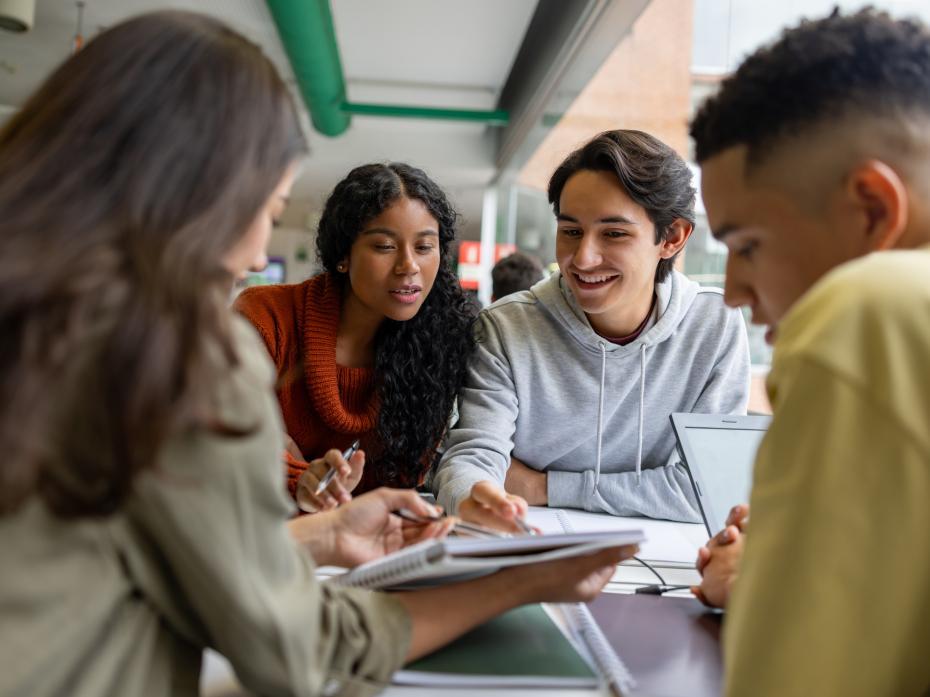
This became clear when our first-year English for Academic Purposes (EAP) students had to create a project proposal in teams. Instead of completing the opening statement, background, methodology, benefits, conclusion and a reference list together, they adopted a “divide and write” approach. This meant they ended up splitting the proposal into separate sections for individuals to complete on their own. This hampered creativity and communication and yielded poorer work.
A range of factors, such as cultural differences, uneven language proficiency, limited previous teamwork experience and unequal workloads, make students wary of group work. We developed the Smart framework in response. Here’s how it works:
Shared start: we start by requiring each group to agree on a topic of focus, formulate research questions and create a shared outline before they begin drafting their proposal. This is to emphasise the importance of communication and collaboration and reduce the tendency for students to divide the proposal into separate tasks too early.
Managed roles: next, we guide students to assign clear roles within their groups, such as coordinator, research lead, drafter, language editor and reference manager, and encourage them to rotate these throughout the project stages. This structure helps all students, including those with limited previous group work experience, to understand their responsibilities and fulfil their duties effectively. It also ensures workloads are even.
Assisted communication: during this stage, we provide communication scaffolds, such as meeting agenda templates and sentence starters, to foster constructive conversations. These include initiation phrases such as, “I suggest that we should…” and “Maybe we could…”; phrases that facilitate polite disagreement, such as, “Admittedly, your point is sensible, but…” and “That is a good idea, however…”; and summarising phrases, such as, “To summarise, our final decision is…” and “Just to confirm, we decided to…”. These help students with mixed ability levels contribute more confidently, while also reducing misunderstandings caused by conflicting cultural communication styles.
Regular checkpoints: we break the task into milestones such as topic approval, evaluation of sources, outline submission, first draft and full draft completion. We also run short check-ins throughout the process. These checkpoints encourage continuous collaboration rather than last-minute individual writing, and they allow us to identify issues such as low participation, lack of integration or conflict early.
Transparent contribution: we require groups to work in collaborative live documents that make editing and commenting records visible. These provide evidence of their peers’ contributions, which students must then evaluate by reviewing editing timestamps, comment history, tracked changes, referencing work and the quality of suggestions made in the document. This transparency strengthens accountability, discourages free-riding and gives the teaching team a better understanding of who is contributing and how much.
- Spotlight guide: Soft skills for hard times
- Taking the pain out of group assessment
- Blend individual and group work to build creative confidence
The Smart model in action
We used the Smart model to help a group of students with limited teamwork experience work together on an environmental sustainability project. To ensure that everyone was invested in the topic of focus, we assigned each student a specific research area, such as our student accommodation recycling programme or the biodiversity on the rooftop of the teaching building, and they presented their findings to the group. They then voted for the most viable option among themselves.
Before they started drafting the proposal, we created a survey adapted from the Myers-Briggs Type Indicator personality test to identify each group member’s strengths. This helped with assigning roles such as coordinator, researcher and drafter. For example, students who demonstrated organisation and communication skills were assigned as coordinators; those with analytical skills and attention to detail became researchers; and students with strong writing and creativity took the drafter roles. To encourage face-to-face communication, we guided students to set pre-meeting agendas and provided handouts containing advice.
Before they began drafting, we provided feedback on the group’s chosen topic, outline and sources. We also encouraged them to give each other feedback. During the drafting phase, students used Google Docs to provide the drafter feedback on language, structure and source integration, with comments clearly attributed to each member. Throughout both phases, we provided communication scaffolds to support effective collaboration and problem-solving. This approach cultivated a sense of community and shared responsibility, leading to a cohesive and impactful proposal.
Eighty per cent of students we surveyed said the Smart approach made them feel better prepared and more motivated to work as a team. We encourage other educators to try the framework if they’re struggling to get students to work together.
Ya Zhang is an associate language lecturer, and Shuhao Zhang and Yu Liu are language lecturers at the Global Cultures and Languages Hub, Xi’an Jiaotong-Liverpool University in China.
If you would like advice and insight from academics and university staff delivered direct to your inbox each week, sign up for the Campus newsletter.
